Drive south out of town on Highway 385 and you will pass two kinds of cotton fields: ones that still have a shot at a real yield, and ones that are already being written off. The distance between the two can be as small as the width of a county road, according to reporting earlier this month from the Lamb County Leader-News, which covered the split-decision stretch of the growing season now underway across the Texas High Plains. That distinction, invisible to anyone just passing through, is the actual engine behind how Littlefield spends its August and September. Not the festival calendar. Not the boulevard named for the town's most famous musician. The cotton.
If you have lived here more than a season, you already sense this. What most people have not stopped to name is how completely the rest of the town organizes itself around two agricultural poles, one right now and one in January, and how little room that leaves for the version of Littlefield that shows up in a quick internet search.
The City's Own Calendar Is Empty This Month
Check the City of Littlefield's public events calendar and you will find nothing listed for August. That is not an oversight. Littlefield does not run on a published civic calendar the way a bigger city might. The town's biggest organized annual gathering, Celebrate Littlefield, runs from the Friday before the third Saturday of July through midnight that Saturday, a tight, one-weekend window confirmed on the city's own calendar page. It already happened this year. Once it is over, the town does not have another civic event waiting to fill the gap. The gap gets filled by harvest.
That is the part outsiders miss when they picture Littlefield through Waylon Jennings Boulevard and a summer street fair. The boulevard is real, and it is named for a hometown son who became one of the defining voices in country music. But right now it is mostly a working street. Two of the town's more established sit-down restaurants, Locos Restaurant and Bar and Nopalitos, sit directly on it, a few blocks apart, both serving lunch crowds who are thinking about field conditions, not music history.
The Water Restriction That Explains the Yards
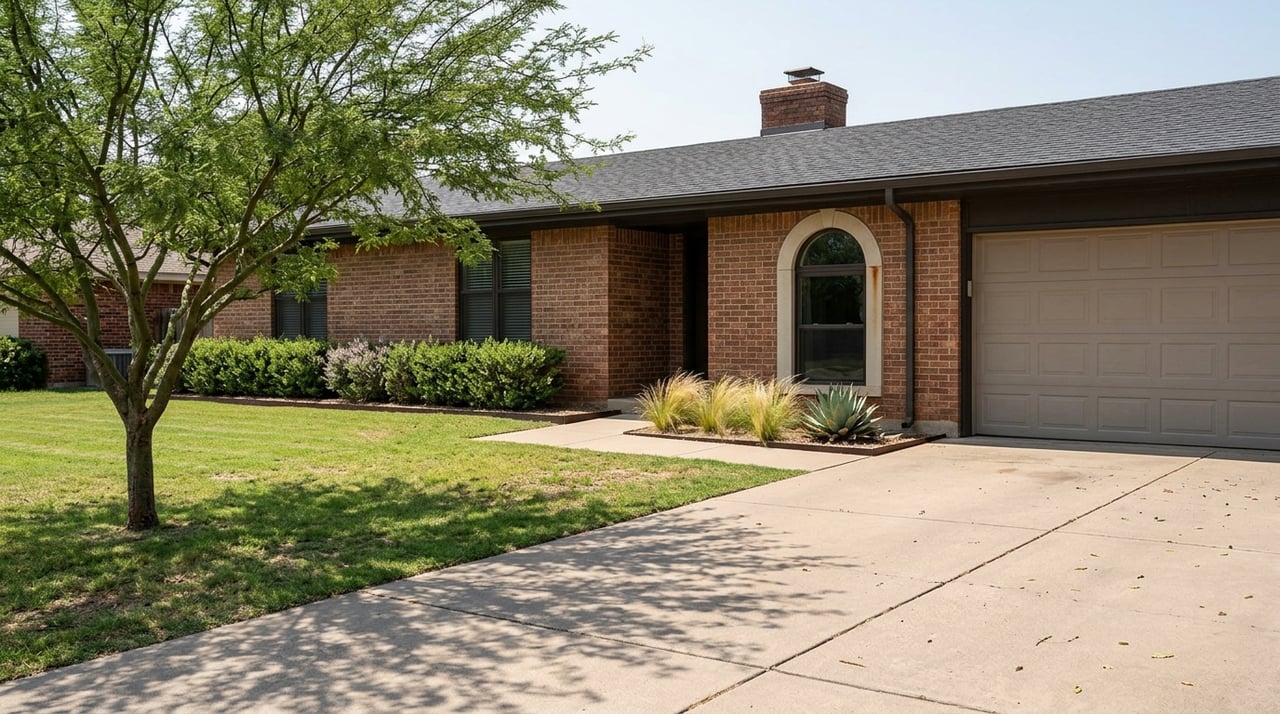
Here is the detail that ties the season together. The City of Littlefield currently has water restrictions in effect, posted as an active notice on the city's website under the heading "2026 Water Restrictions, Effective Immediately." That single administrative notice explains something a lot of residents have noticed without connecting: yards look different this year, and it is not neglect. It is the same water stress driving the cotton coverage down the road. When the same underground water that irrigates a cotton field also has to stretch across every lawn and garden hose in town, the city pulls the lever it controls, which is municipal use, while farmers manage the lever they control, which is field-by-field irrigation timing. Both restrictions are responses to the same shortage. Most people only notice one of them.
If your lawn has looked thirstier than usual since midsummer, that is not a coincidence specific to your address. It is the same math playing out at a household scale that Plains Cotton Growers described playing out at a field scale.
Where the Eating Actually Happens
Littlefield's restaurant scene is small enough that hours tell you almost everything about how the town uses its day. Dixie's Too, on Hall Ave, keeps breakfast-and-lunch hours only, open from 8 a.m. to 2 p.m. That is a daytime town's schedule. Locos Restaurant and Bar, by contrast, runs from 11 a.m. to 9 p.m. most days and allows dogs on its patio, making it one of the few spots in town built for an evening stop rather than a midday one. Nopalitos keeps similar full-day hours just up the boulevard. Between those three, plus names locals already know like Wild Cat Country Cafe, Outlaw Country Cafe, Sanchez Fish N Chicken, and Hana Grill, the pattern is a town that eats out mostly at midday and treats an actual dinner out as something you plan for, not something that happens by default on a Tuesday.
None of this is dramatic. It is just accurate, and accuracy is worth more than atmosphere when you already live somewhere and do not need it romanticized back to you.
Bull Lake Is the Release Valve, and It Is Not Even City Land
When the week gets long, the closest thing Littlefield has to an escape valve sits about five miles west of town: Bull Lake. It covers approximately 444 acres and shows up on fishing platforms and, more tellingly, on a dedicated page from Birding Hotspots, which tracks it as an active spot for bird sightings in Lamb County. That is a real, specific reason to make the drive that has nothing to do with the harvest at all.
Here is the part most residents do not know. Bull Lake Municipal Park is not land the city owns outright. Under the city's own code of ordinances, the lake and its shoreline are designated a city park while remaining property leased from a private landholder, with the city enforcing state water safety law and its own park ordinances on that leased ground. It is a small governance quirk, but it is the kind of thing that only shows up if you go looking, and it means the park's future depends on an agreement, not a deed. For a town whose recreational options are limited, that is worth knowing rather than assuming.
The Other Half of the Ag Calendar Comes in January
If cotton is the pole the town orbits right now, the counterweight arrives every January, when the Littlefield Area Junior Livestock Show and Sale takes over the Lamb County Ag and Community Center barn. The Leader-News coverage from January 2026, the most recent edition of the show, describes 4-H and FFA exhibitors from Littlefield, Amherst, Springlake-Earth, and Sudan bringing animals in over several days of weigh-ins, judging, and an auction. It is a completely different season and a completely different set of families involved, but it is the same underlying pattern: the town's real anchor points are set by agriculture, not by a tourism office or a monthly events page.
That is the thesis worth sitting with. Littlefield does not have a packed civic calendar because it does not need one. The two events that actually shape how residents move through their year, the harvest stretch now and the stock show in January, are not on anyone's list of things to do. They are just what the town does.
What This Means for the Weeks Ahead
None of this requires a decision on your part. It is simply the honest shape of the season. Expect slower stretches on 385 as trucks move through, expect the restaurant crowd at Dixie's Too to thin out by early afternoon, expect your own water use to stay under the same restriction the whole town is working around, and if you need a Saturday that has nothing to do with any of it, Bull Lake is still about five miles away and still worth the drive.
If you are watching the Littlefield market from the outside and wondering whether a town like this, one that runs on field conditions and livestock schedules rather than a marketing calendar, is the kind of place where you would want to put down roots, that is exactly the sort of question we talk through with people every week. Condor Property Group works across Littlefield and the rest of Lamb County, and we are always glad to walk through what a specific street or price range actually looks like here. Reach out when you are ready, and in the meantime, get your instant home valuation to see where your own numbers stand.